Crypto crash versus holding long term which is better and why
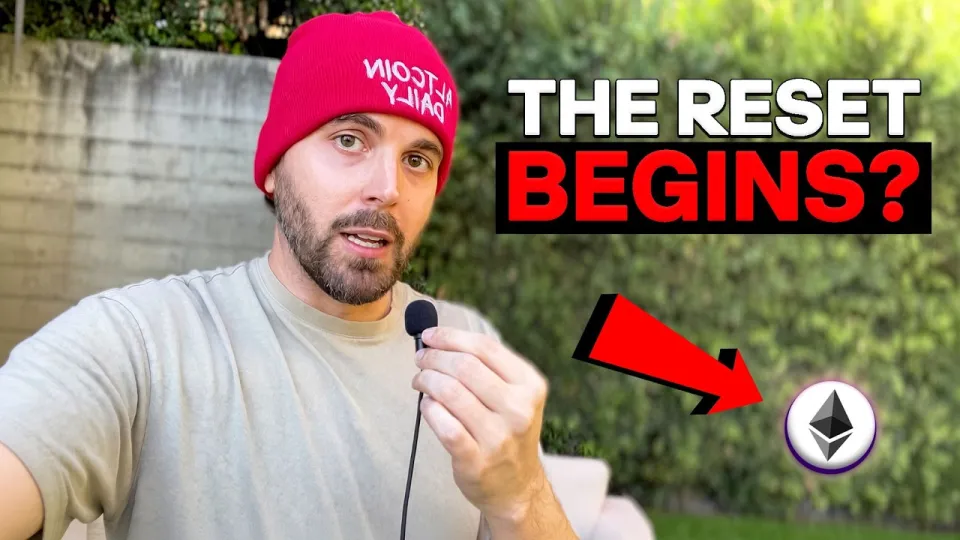
Video: Crypto Investors Are In Serious Trouble (market crash)
You can order the same kind of articles for your own video to boost it on YouTube and Google. Just message the Telegram bot @sat_sit_bot. It writes articles around your video, embeds the video and publishes them on popular niche websites (no ads). Try it free: 50 articles on us.
· based on the channel Altcoin Daily
Holding through a crypto crash is better than panic selling if your position is spot, unleveraged and funded with money you do not need soon; buying more is better only when you have a written plan and dry powder set aside before the drop. Everything else — timing the bottom, chasing a bounce, or selling at the low — is a bet on short-term price direction that most retail investors lose.
What a crypto crash actually changes and what it does not
A crash changes price and sentiment; it does not change the supply schedule, the code, or the number of people using a network. Bitcoin traded at $80,707 on October 24, 2026, according to figures circulating around the market discussion, which puts its five-year compound annual growth rate at 5.78% — a reminder that even a widely held asset can deliver a modest multi-year return after a strong run and a deep drawdown. That number is the single most useful fact for framing the current mood: a market can feel like a disaster while still being roughly flat-to-positive over five years.
What breaks investors in a drawdown is structure, not direction. Three things do the damage:
- Leverage — a 20x position is liquidated by a 5% move, so the investor is removed from the market at the worst moment.
- Concentration — an all-in position in one altcoin means no ability to average down and no ability to wait.
- Time horizon mismatch — money needed within a year should never sit in an asset that can drop 40% in a week.
If none of those apply, a crash is an accounting event, not a loss.
Why long-term holders treat a crash as a buying window
The core argument for buying during a crash is arithmetic: the same asset at a lower price produces a lower average entry and a larger position for the same capital. An investor who bought at $100 and adds at $60 ends up with an average near $80, and the position turns profitable at a much smaller recovery than the original entry required. That is the entire logic behind dollar-cost averaging and averaging down.
The catch is that averaging down requires two things most people do not have when the drop arrives: cash that was reserved in advance, and a rule that caps how much of the portfolio goes into any single asset. Without a cap, "buying the dip" becomes doubling down on a losing bet. With a cap — say no more than 10–20% of the portfolio in any one altcoin — the strategy stays survivable even if the asset never recovers.
A second, quieter argument: crashes are when the market hands out information. Projects that keep shipping, keep their treasury, and keep their community during a 50% drawdown are structurally different from those that go silent. The drawdown is a stress test you cannot run in a bull market.
Why not every coin comes back the way Bitcoin does
Bitcoin has historically printed a higher high in every cycle; most altcoins have not. A large share of tokens from earlier cycles made a peak that was never revisited, and some never will be, because their unlock schedules, emissions, or narratives expired. This is the single biggest reason "just hold" is not a universal rule — it is a rule about Bitcoin and a handful of large, liquid assets, not about a portfolio of small caps.
The practical test before deciding to hold through a crash:
- Does the asset still have a credible team, treasury and roadmap?
- Is there real usage, or only speculation?
- Is the token supply still inflating through unlocks or emissions?
- Would you buy it today at this price with fresh money?
If the answer to the last question is no, holding it is not conviction — it is anchoring on the price you paid. Rotating out of a broken position during a drawdown is often more valuable than averaging into it.
The questions investors actually ask during a drawdown
Most of the anxiety in a crash comes from the same handful of questions, and each has a workable answer.
"Is this manipulation or a real crash?" It rarely matters for a spot holder. A sharp wick down that recovers within days and a genuine trend reversal look identical in the first hours; the difference only shows up over weeks. Reacting to the first candle is how people sell the bottom.
"Should I check prices every day?" No. Daily checking during a drawdown increases the chance of an emotional trade and adds nothing to a long-term plan. A weekly or monthly review is enough for a spot portfolio.
"Should I sell and rebuy lower?" Only if you have a documented rule for when to re-enter — and most people who sell in a crash do not re-enter until the price is higher than where they sold.
"What about the next cycle — will it even come?" Nobody can promise a cycle. What can be measured is adoption, supply issuance and liquidity; those are the inputs worth tracking instead of a calendar.
How to build a plan that survives the next crash
A crash-proof plan is written before the crash, in five steps.
- Set a maximum allocation per asset, so no single position can force a decision.
- Keep a cash reserve explicitly labelled for drawdowns, sized in advance — commonly 10–30% of the portfolio.
- Define entry tranches: for example, buy in three equal parts at -20%, -35% and -50% from your last purchase.
- Remove leverage entirely from a long-term spot portfolio; liquidation risk is the one risk you cannot average out of.
- Write the exit rule for any asset that fails the fundamentals test, so a drawdown does not become an indefinite hold by default.
None of this predicts the bottom. It simply guarantees that a drawdown is a decision you planned for rather than one that is made for you by a margin call.
Where to follow the market breakdowns
Altcoin Daily covers these market conditions in video format, including the crash discussion this article is based on. Viewers looking for channel merchandise and supporter perks can find them through the Altcoin Daily shop at the official Altcoin Daily store, which lists the available products directly.
The bottom line on crypto crashes
The better choice during a crypto crash is to hold spot positions that pass the fundamentals test and to buy only with money reserved in advance, in tranches, without leverage. Panic selling locks in the loss and removes the recovery; indiscriminate averaging down turns a bad week into a permanent position in a broken asset. Bitcoin's 5.78% five-year CAGR at a price of $80,707 shows that even the largest asset can spend years consolidating, so patience has to be paired with position sizing. The investors who come out ahead are the ones whose rules were written before the red candles appeared. Altcoin Daily's breakdown of the current sell-off is a useful starting point for building those rules.
Key takeaways
- Bitcoin traded at $80,707 on October 24, 2026, giving a five-year CAGR of 5.78%.
- A crash is a price drawdown, not a change in the underlying asset; long-term holders treat it as an entry point.
- Averaging down lowers the average entry price but increases exposure to an asset that is still falling.
- The main risk in a drawdown is leverage and forced selling, not the spot position itself.
- Every cycle has produced lower highs in some altcoins that never revisited their old peak, unlike Bitcoin.
Questions & answers
Is a crypto crash a good time to buy?
It can be, if you have cash reserved in advance and buy in tranches rather than all at once. A lower entry price reduces your average cost, but only for assets that still pass a fundamentals check. Buying with borrowed money or with funds you need soon turns a dip into a real loss.
Should I sell my crypto during a market crash?
Selling makes sense for positions that fail the fundamentals test — no credible team, no usage, ongoing token unlocks. For large, liquid assets held spot without leverage, selling at the low usually locks in the drawdown and leaves the investor waiting for a higher price to re-enter.
What does Bitcoin's 5.78% five-year CAGR mean for investors?
It means that even with a price of $80,707 on October 24, 2026, Bitcoin's five-year compounded return was modest after a strong earlier run. It is a reminder that long holding periods can include multi-year flat stretches, so returns should be judged over cycles, not weeks.
How often should I check prices during a downturn?
For a long-term spot portfolio, weekly or monthly is enough. Constant checking during a drawdown raises the odds of an emotional trade and adds no information about the asset's long-term value. Set alerts at your planned entry levels instead of watching every candle.
Source: Crypto Investors Are In Serious Trouble (market crash) · Markdown version